
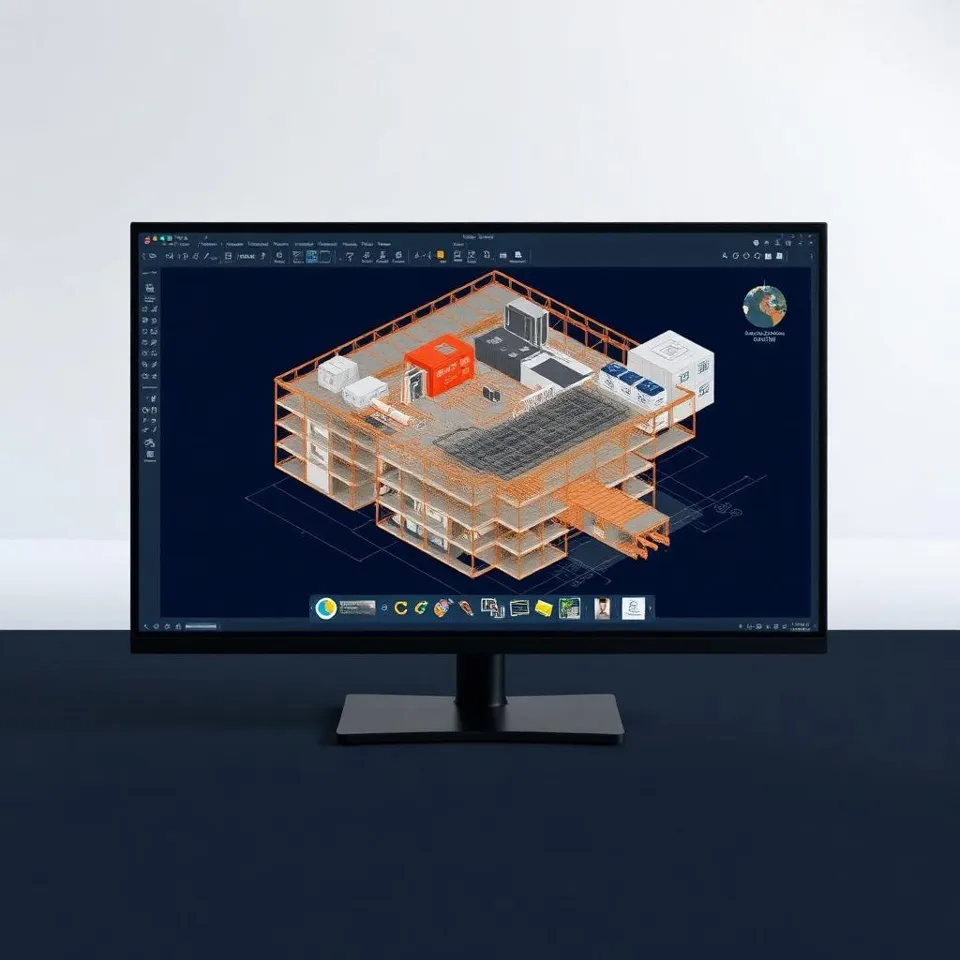
Building Information Modelling is most useful when it supports decisions that the project team actually needs to make. Mid-tier developments can benefit from disciplined model coordination without adopting an unnecessarily complicated technology stack.
Start with a clear information brief
Define why the project needs a model: spatial coordination, quantities, construction sequencing or handover information. Set the required detail for each stage and identify who owns each part of the model.
Agree coordinates, levels, naming conventions, exchange formats and issue dates before modelling begins. These fundamentals prevent mismatched models and avoid spending coordination meetings solving file-management problems.
Federate models and prioritise clashes
Combine discipline models into a federated view while keeping responsibility with the originating designer. Review structural elements against building services, access zones and architectural clearances.
Not every automated clash is a construction problem. Group issues by consequence, assign an owner and record the agreed resolution. Focus first on clashes that affect structural safety, plant access, critical dimensions or long-lead procurement.
Keep the model aligned with issued drawings
A model is not a substitute for a controlled construction issue. Define which drawings and schedules govern the work, and reconcile significant differences before tender or construction milestones.
At handover, deliver only the information that the owner can maintain and use. A modest, reliable asset dataset is more valuable than an elaborate model with unverified information.
General information only, not project-specific engineering or legal advice. Confirm current codes, legislation and authority requirements with your project team.
Get a quote